

Safeguarding
At St. Michael’s Church of England Primary School, the safety, wellbeing, and protection of every child is our highest priority. We are committed to creating a secure, nurturing environment where children feel safe, valued, and heard. This commitment is shared by all staff, volunteers, governors, and parents.
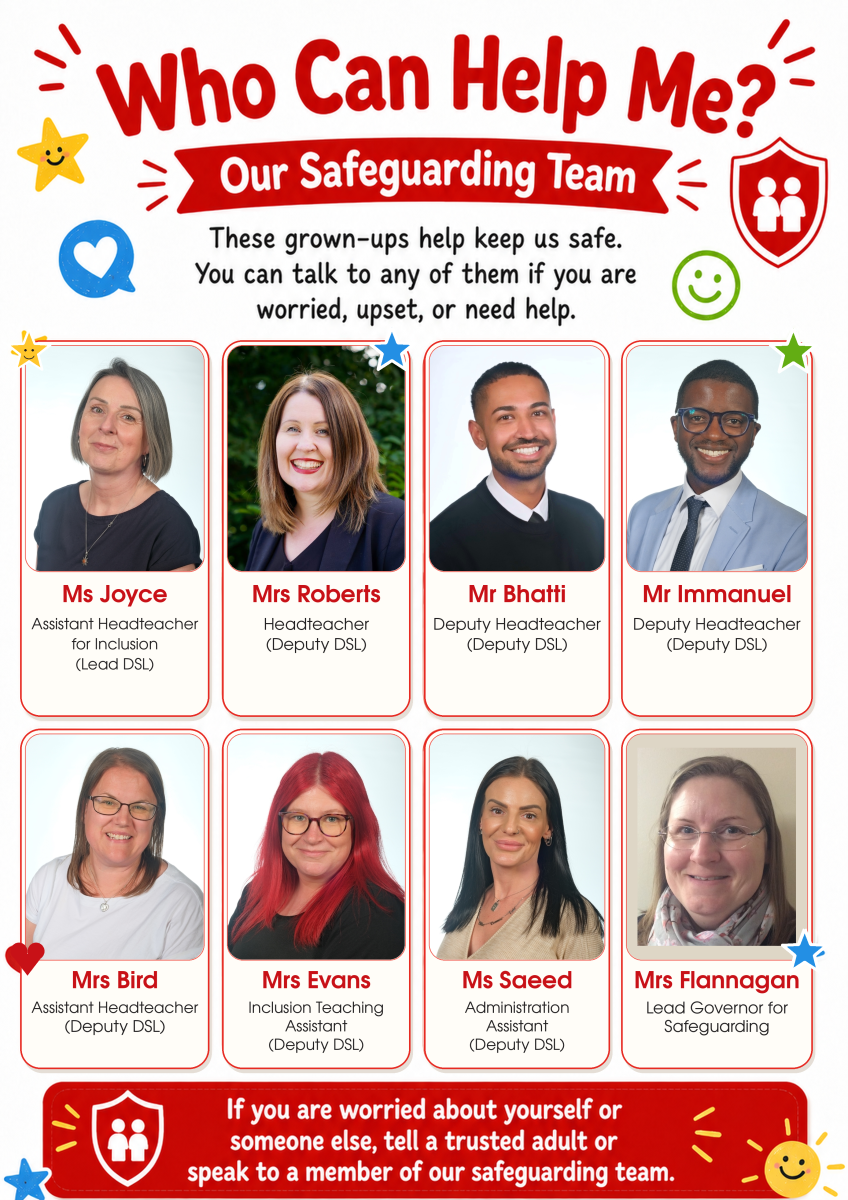
Our Safeguarding Team
We encourage anyone with concerns about a child’s safety or wellbeing to report them immediately. Concerns can be raised directly with the Designated Safeguarding Lead (DSL) or through the school office.
Safeguarding Policies
We have a comprehensive Safeguarding and Child Protection Policy, which outlines our approach to keeping children safe.
Other key policies that support pupil wellbeing include:
- Attendance Policy
- Positive Relationships and Behaviour Policy
- Anti-Bullying Policy
- Computing Policy
- DSL Supervision Policy
- Online Safety Policy
- Health and Safety Policy
- Parent Code of Conduct Policy
- Supporting Pupils With Medical Conditions Policy
- Child on Child, Sexual Violence and Sexual Harassment Policy
- Intimate Care Policy
- First Aid Policy
- Physical Intervention and Care Policy
- Supporting Pupils With Medical Conditions Policy
- Whistleblowing Policy
We follow Safer Recruitment and adhere to the Department for Education’s statutory guidance: Keeping Children Safe in Education.
All of our policies are available on the Policies Page.
Online Safety
Online safety is a vital part of our safeguarding approach. Children are taught how to stay safe online through our computing curriculum, assemblies, and dedicated lessons. Parents can find useful resources and guidance on our Online Safety Page.
Health, Safety And Confidentiality
We implement a robust Health and Safety Policy to ensure the physical safety of children and staff. Regular safety walks are conducted by our Site Manager, Governors, and Leadership Team.
We also follow strict data protection and confidentiality procedures, ensuring that all personal information is handled securely and responsibly.
Training and Vetting
All staff receive extensive training in Child Protection and Safeguarding, updated regularly to reflect current best practices. All adults working in school undergo Disclosure and Barring Service (DBS) checks.
Prevent Strategy
We are fully committed to the Prevent Strategy as part of our safeguarding and child protection duties. All staff have received WRAP (Workshop to Raise Awareness of Prevent) training. Key elements of the Prevent Strategy are reflected in our Safeguarding Policy and in our commitment to building resilience against extremist views among children and young people.
Mental Health, Emotional support and Wellbeing
We recognise that mental health is a vital part of safeguarding. We are committed to supporting the emotional wellbeing of our pupils and their families. You can find more information and resources on our Mental Health Page.
If you or someone you know needs urgent mental health support, the following services are available:
External support
If you are concerned about the safety of a child outside of school hours or in the wider community, you can contact:
- NSPCC – 0808 800 5000
- CEOP – for online safety concerns
- Birmingham Children’s Trust – to report a concern or get help and support
- In an emergency, always call 999
Safeguarding Through the Curriculum
At St Michael’s C.E. Primary School, safeguarding is at the heart of everything we do. We recognise that safeguarding is not taught through one lesson or subject alone. It is woven throughout our curriculum, relationships, routines and wider school life.
Through our RSE and PSHE curriculum, alongside our wider curriculum and daily practice, pupils are taught the knowledge, vocabulary and skills they need to keep themselves and others safe. Learning is carefully sequenced from Nursery to Year 6 so that children develop increasing confidence and independence in recognising risk, understanding healthy relationships, setting boundaries, making safe choices and seeking help when they need it.
Nursery
In Nursery, safeguarding foundations are developed through everyday teaching, routines, relationships and continuous provision. Children learn to:
- build secure relationships with familiar adults and seek comfort or help when needed;
- recognise and begin to name simple feelings;
- communicate their needs, choices and interests;
- tell adults when they are hungry, tired, need help or need support with personal care;
- follow simple boundaries, routines and expectations;
- begin to recognise danger with adult support;
- develop increasing independence in handwashing, toileting, dressing and managing personal needs;
- use tools, equipment and the Nursery environment safely;
- move safely around different spaces, levels and surfaces;
- understand that actions have consequences and begin to consider the feelings of others;
- learn about people who help us, including doctors, nurses, dentists, police officers, firefighters and the lollipop person;
- use digital devices and access information with adult support and supervision;
- understand simple ways to keep themselves healthy and safe.
These early foundations help children develop the language, confidence and relationships they need to recognise when they need help and to approach trusted adults.
Reception
In Reception, children continue to develop their understanding of safety, relationships and wellbeing. They learn about:
- recognising, naming and expressing feelings and emotions;
- strategies for managing strong feelings;
- positive relationships, friendships and special people;
- the importance of rules and why they help to keep people safe;
- telling the truth and considering the feelings of others;
- taking care of themselves;
- identifying people who are special and can offer help and support;
- road and pedestrian safety;
- healthy choices and looking after their physical and emotional wellbeing.
Year 1
Pupils learn about:
- staying safe and behaving respectfully online;
- recognising appropriate and inappropriate online behaviour;
- responding to unsuitable online content;
- rules that help to keep people and communities safe;
- recognising everyday hazards and situations that could cause harm;
- road safety and potentially dangerous items;
- recognising body clues that may signal that something is wrong;
- identifying and seeking help from trusted adults;
- understanding how germs spread and how to reduce the risk of illness;
- getting help in a medical emergency.
Year 2
Pupils learn about:
- recognising unkind behaviour and bullying;
- kindness, respect and positive relationships;
- personal space, privacy and boundaries;
- identifying trusted adults who can help when they feel worried or unsafe;
- recognising that not everything online is suitable or trustworthy;
- responding safely when online content makes them uncomfortable or worried;
- using the correct scientific names for private body parts;
- understanding privacy and personal boundaries;
- keeping their bodies safe;
- making safe choices at home, in public places and around water;
- confidently asking for help when needed.
Year 3
Pupils learn about:
- the impact of bullying on wellbeing;
- how and where to access support;
- personal boundaries and healthy relationships;
- different types of bullying and how to respond;
- safe and respectful online communication;
- recognising online bullying;
- seeking help when online experiences are upsetting;
- medicines, hygiene, sun safety and preventing illness;
- basic first aid;
- when and how to seek medical help, including calling 999.
Year 4
Pupils learn about:
- respectful and disrespectful behaviour;
- building trust and resolving friendship difficulties;
- responding to bullying;
- stereotypes and the negative impact they can have;
- critically evaluating online information;
- checking whether online information is reliable;
- privacy, boundaries and consent;
- identifying trusted people to speak to for support and advice;
- recognising warning signs and uncomfortable situations;
- responding safely when something does not feel right;
- road and water safety;
- the difference between medicines and harmful substances.
Year 5
Pupils learn about:
- managing emotions and seeking support;
- healthy relationships and personal boundaries;
- identity, values and how these can influence choices and behaviour;
- where to seek help if home feels unsafe;
- maintaining healthy friendships;
- online influence, advertising and persuasive techniques;
- recognising possible scams;
- responding safely to pressure and persuasion online;
- puberty, personal hygiene and emotional changes;
- identifying trusted sources of support;
- managing money safely;
- recognising risks associated with online spending and gambling.
Year 6
Pupils learn about:
- developing self-respect and resilience;
- setting and maintaining personal boundaries;
- standing up for themselves and others;
- recognising and challenging bullying, discrimination and stereotypes;
- seeking help from trusted adults and support services;
- managing the impact of online experiences on emotional wellbeing and relationships;
- developing healthy and balanced habits around technology;
- assessing risk and planning how to stay safe independently;
- safe travel;
- recognising hazards around roads, railways and water;
- resisting peer pressure;
- first aid and responding appropriately in an emergency;
- making an effective 999 call;
- consent and respectful relationships.
Safeguarding learning becomes increasingly sophisticated as pupils move through the school. Children progress from learning to recognise feelings, danger and trusted adults in the Early Years to developing the confidence to manage risk, understand consent and boundaries, challenge harmful behaviour and make increasingly independent and informed decisions by the end of Year 6.
Our aim is that every child leaves St Michael’s with the knowledge, confidence and vocabulary to recognise when something is not right, know how to keep themselves and others safe, and understand that they should always speak to a trusted adult if they are worried or need help.